
Decent Homes Standard
Social housing and soon to be private housing property standards
Helping landlords provide safe, warm and well-maintained homes
Since 2006, the Decent Homes Standard sets the minimum condition that rented homes should meet in England. It is currently a regulatory standard for social housing, including homes managed by councils and registered housing providers.
The Government has also confirmed that a revised Decent Homes Standard will be introduced for both social housing and privately rented homes from 2035.
Current official UK government guidance: Decent Homes Standard – June 2006
New UK government guidance arriving 2035: Decent Homes Standard – 2035
To get ahead of the updated policies, to start considering the decent homes standard for private lettings now DampRo UK offer Decent Homes surveys to social and private rented housing landlords, for more information below:
What is the current Decent Homes Standard?
Under the current standard, a property is considered decent when it:
Criterion A: Meets the statutory minimum standard for housing
The property should not contain any Category 1 hazards under the Housing Health and Safety Rating System (HHSRS). These are the most serious hazards that may present a significant risk to the health or safety of occupants. For more information about the HHSRS system please click the button below:
Category 1 hazards are the most serious housing risks. The assessment considers how likely it is that someone could be harmed within the next 12 months and how severe that harm could be.
As of June 2026, the 21 types of hazard assessed under the current HHSRS, for more information please see here: INSERT LINK
A defect does not automatically make a property non-decent. Its likelihood of causing harm and the potential seriousness of that harm must be assessed. Where a hazard reaches the Category 1 threshold, remedial action is required to remove the hazard or reduce the risk to an acceptable level.
Compliance Checks: It is worth noting that without an in-date compliance check, hazards cannot be verified as present or not, therefore checks such as the Electrical Installation Certification Report (EICR) or a Landlord Gas Safety Record (LGSR) must be completed within the due date, to avoid breaking the decent homes standard as of criterion A and B (see below)
Criterion B: Property is in a reasonable state of repair
Under the current Decent Homes Standard, a property fails Criterion B where:
- One or more of the key building components are old and, because of their condition, need replacing or major repair; or
- Two or more of the other building components are old and, because of their condition, need replacing or major repair.
“Poor condition” means the component needs replacement or immediate major repair. Age alone does not cause a failure, however a component being in poor condition and requiring immediate replacement does cause a failure.
Examples of key and other components are below with their standard lifetimes:
| Key component | Standard lifetime |
|---|---|
| Wall structure | 80 years |
| Lintels | 60 years |
| Brickwork affected by spalling | 30 years |
| External wall finish | 60 years for houses and low-rise flats; 30 years for high-rise flats |
| Roof structure | 50 years for houses; 30 years for flats |
| Roof covering or finish | 50 years for houses; 30 years for flats |
| Chimneys | 50 years |
| Windows | 40 years for houses; 30 years for flats |
| External doors | 40 years for houses; 30 years for flats |
| Central-heating gas boiler | 15 years |
| Other principal heating, including storage heating | 30 years |
| Electrical system | 30 years |
| Other component | Standard lifetime |
|---|---|
| Kitchen | 30 years |
| Bathroom | 40 years |
| Central-heating distribution system, including pipework and radiators | 40 years |
Criterion C: Property has reasonably modern facilities & services
Dwellings which fail to meet this criterion are those which lack three or more of the following:
- A reasonably modern kitchen (20 years old or less)
- A kitchen with adequate space and layout
- A reasonably modern bathroom (30 years or less)
- An appropriately located bathroom and WC
- Adequate insulation against external noise (where external noise is a problem)
- Adequate size and layout of common areas for blocks of flats
A home lacking two or fewer of the above is still classed as decent, therefore it is not necessary to modernise kitchens and bathrooms if a home meets the remaining criteria.
Criterion D: Property provides a reasonable degree of thermal comfort
This criterion requires dwellings to have both effective insulation and efficient heating.
| Adequate Heating system |
|---|
| Programmable gas central heating, including a gas combi boiler |
| Programmable oil central heating |
| Electric storage heaters |
| Warm-air heating system |
| Underfloor heating system |
| Programmable LPG central heating |
| Programmable solid-fuel central heating |
| Air-source or ground-source heat pump |
Who is the Decent Homes Standard relevant to?
From 2035, the Decent Homes Standard will apply to the private rented sector for the first time. Landlords will need to ensure their rented properties meet minimum requirements for safety, repair, facilities and thermal comfort. Preparing early can help identify properties requiring investment or remedial work before the standard becomes enforceable.
Registered social housing providers are already required to manage their homes against the Decent Homes Standard. This involves identifying non-decent properties, maintaining accurate stock-condition information, prioritising investment and ensuring homes remain safe and in a reasonable state of repair. The new standard will update these requirements further.
Managing agents may support landlords in meeting their responsibilities by identifying property defects, arranging inspections and repairs, maintaining records and escalating significant issues. Understanding the Decent Homes Standard can help ensure problems are recognised and acted upon before they become more serious.
Property condition and whether a home meets recognised housing standards can become important where there are complaints, disputes or disrepair proceedings. An independent inspection can document defects, identify relevant hazards and provide evidence of the property’s condition and the remedial work that may be required.
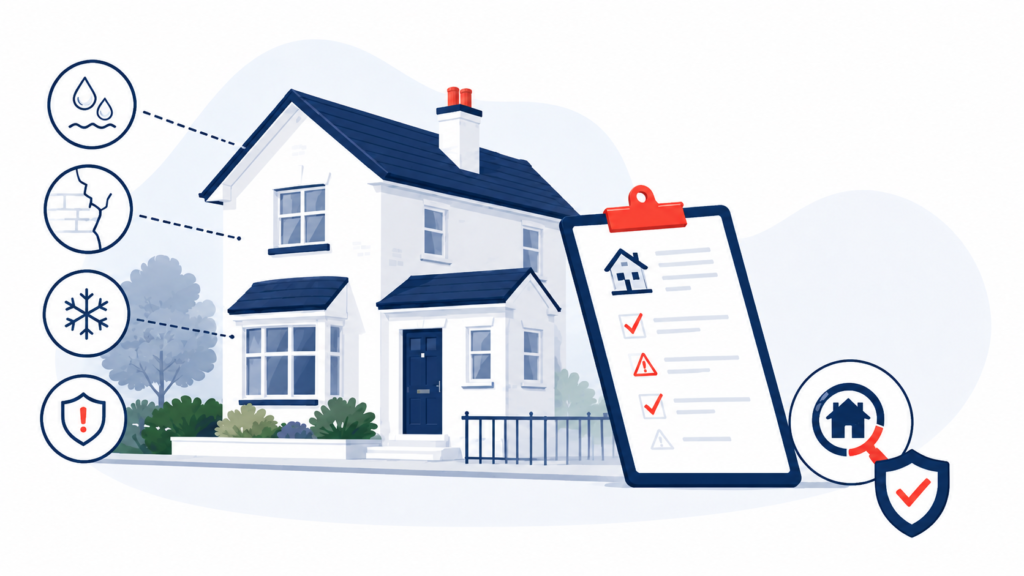
Owner-occupiers are not required to comply with the Decent Homes Standard in the same way as rented housing providers. However, the principles provide a useful benchmark when considering the overall condition, safety and suitability of a property. A condition assessment can identify significant defects and help buyers understand potential repair or improvement costs before purchase.
Need support with the Decent Homes Standard?
Whether you are assessing a single property or reviewing a wider housing portfolio, DampRo UK can help identify potential failures against the Decent Homes Standard, provide clear evidence of property condition and recommend practical actions to bring homes up to the required standard.